Sustainability is a choice, not a chore
The concept of sustainability, or rather what aspects of any given action, development or innovation make it “sustainable” can more often than not be contested. As I wrote in my previous op-ed for Metstrade: “Extrapolated onto the longest possible time horizon, some would argue that the idea of ‘sustainable development’ is oxymoronic and impossible.”
Although there is indeed no shortage of greenwashing across many industries, and the marina and boating industry is unfortunately no exception, what cannot be disputed is that the marina and boating industry isn’t going anywhere. While not without certain challenges and obstacles, the industry has seen considerable growth over the last few years.
With that fact in mind, it is incumbent upon marinas to do their utmost to try to mitigate the impact they have on the environment and actively “give back” to the communities and locations that make their existence possible.
Thankfully, the recent growth in the marina industry has been accompanied by a huge number of genuinely interesting and innovative new products developed by startups and scaleups with sustainable operational practices in mind. These innovations have made taking sustainability seriously a choice rather than a chore. This short article will highlight three of my personal favourites that I have come across in recent months.
Biohuts by Ecocean
The French company Ecocean has developed Biohuts, which are artificial nurseries designed to restore ecological functions to developed areas such as marinas. These artificial habitats consist of an inner, small mesh cage filled with oyster shells within a larger mesh cage. The oyster shells in the inner cage, rapidly colonised by all kinds of species requiring hard structure, provide food and shelter for juvenile fish, shrimps and crabs, while the outer cage and the fine mesh inner cage prevent entry of predators, thereby enhancing juvenile survival and recruitment.
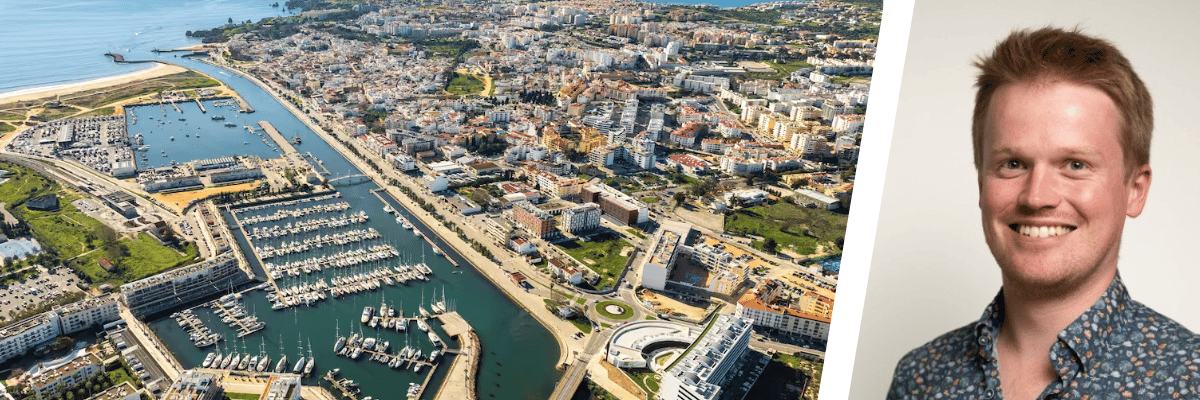
According to Ecocean, some 7,000 of their Biohuts have been installed worldwide across as many as 110 ports in 21 different countries. One such location is Lagos Marina in the south of Portugal, where research showed that installing Biohuts led to a significant increase in fish species and densities against control areas without Biohuts. These preliminary results showed that Biohuts are indeed effective tools for enhancing fish abundance, biodiversity and recruitment in marinas.
However, such Biohuts are by no means a silver bullet to mitigating the negative impacts of marina activity on marine life. As Karim Erzini recently wrote for Marina World:
“The benefits of marinas in terms of habitat, protection and as potential marine protected areas are however dependent on factors that can negatively impact fish populations. Pollution and low oxygen content in the water, known as hypoxia, can be harmful especially in marinas with poor water circulation due to low tidal amplitude. We now know that in addition to well-known and studied pollutants such as chemicals from sewage, paint and fuel, marine organisms are also susceptible to noise and light pollution that cause stress, abnormal behaviour and may even drive some species away. Marinas are also points of entry of invasive species that may become competitors or predators of native species.”
“Ecosystem” is not just a buzzword to describe the integrated waterfront destination model that defines many newer marina projects. Beneath the waterline, marinas are ecosystems in the truest sense of the word, and one that marinas can and should do much to protect.
Meltem by One Concept Marine
Another French company, One Concept Marine, has taken the Biohuts one step further and combined them in a single floating platform to also include renewable energy generation and rainwater harvesting.
It has a solar canopy to generate renewable energy and the integrated reservoir collects and filters rainwater for rinsing boats. Meanwhile, an artificial reef can be found on the underside of the platform to promote marine life in areas that are often heavily artificial.
“The idea is simple,” the company’s founder Thomas Aboulinc told me in a recent interview. “Use the inert space already available in marinas to initiate a sustainable transition. One unit typically produces around 8,800kWh per year, equivalent to powering ten boats for a season or driving an electric car for nearly 50,000km.”
Meltem emerged from three years of research and development and the first unit was deployed in Saint-Tropez in 2024. The company is now advancing projects in Monaco and in inland and maritime ports across France, and interest is growing internationally as ports worldwide look for practical solutions to challenges linked to energy, water management and sustainable transition, according to Aboulinc.
ReefFloat foam-free marinas
Finally, a British marina float system is emerging as concern grows over pollution caused by expanded polystyrene (EPS) used in pontoons. In the UK, concrete floats containing EPS are classed as hazardous waste and must be sent to specialist landfill sites. Disposal fees can exceed the cost of replacement floats, discouraging timely removal.
According to ReefFloat, more than 10 million marina and pontoon berths have been installed around the world since the 1970s, with many of them using EPS foam for buoyancy. However, as these structures age, outer concrete, plastic or textile layers can crack or deteriorate and allow seawater to reach the foam inside. This EPS foam breaks down into small white beads which, once dispersed, can persist in the marine environment for hundreds of years, and are often swallowed by marine animals such as fish, crabs and turtles, which raises concerns about harm to wildlife and the wider food chain.
In response, a UK start-up has developed ReefFloat, a foam-free alternative for marina and pontoon use. The system uses a low-density foamed concrete core with a structural outer layer and eliminates the need for EPS. Despite the additional weight, it requires only up to 200 millimetres of extra depth to achieve buoyancy and improved stability.
Founder and managing director Toby Budd told us at Marina World that foam release from ageing pontoons is common in UK marinas, where EPS beads often collect in sheltered harbour areas. The ReefFloat team presented the concept at the Marina Pavilion during Metstrade in November 2025, and the concept was also shortlisted for a DAME Design Award.