Finding the sweet spot in marine equipment design
In this Q&A with Volvo Penta’s Head of Marine Business, Hanna Ljungqvist, we learn about the need for a sharp focus on creating customer value when designing new products and how integrated approaches will dominate future thinking and careers.
Author  Kim Hollamby
Kim Hollamby25 May 2026
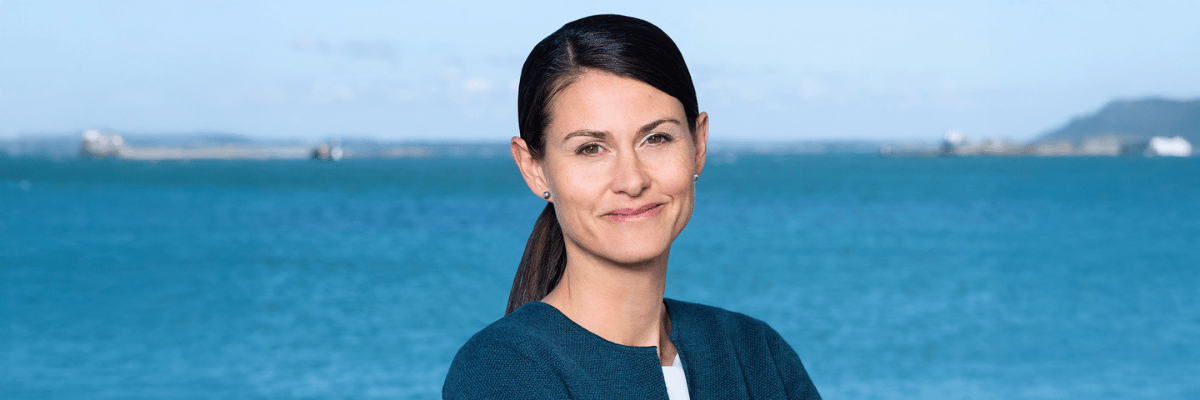
Mechanical engineer and industrial designer Hanna Ljungqvist was appointed Head of the Volvo Penta Marine Business unit last October after rising through the ranks of parent AB Volvo. An industrial design engineering Masters graduate from Chalmers University of Technology, she has an obvious passion for ensuring that products meet or exceed customers’ expectations.
This is an evolutionary era for Volvo Penta Marine. Once known as an engine, outdrive and then a pod drive manufacturer, it has been steadily growing its portfolio of complementary integrated systems for leisure and commercial marine applications, such as its Assisted Docking System which won the overall DAME Design Award in 2021. Later this year the company is set to launch the first in a series of hybrid and full electric propulsion systems, complete with fully integrated batteries, power and temperature management.
Metstrade caught up with Hanna aboard one of Volvo Penta’s 30-strong trials fleet at the company’s impressive Krossholmen Test Center in Sweden.
At the commencement of my career, I was engaged at Volvo Group during my studies as a summer worker. I got to see real life as a design engineer working in the cab development of Volvo trucks. The work I did, which included designing features for the cab exterior and lighting, was all about user experience and I enjoyed those days.
I then took the opportunity to join Volvo Group as a graduate and have been there ever since, working first on truck product development, before moving over to Volvo Penta. The largest part of my time at the company has been within the marine sector – first with product management, then business development before moving over to the commercial side.
At Volvo Penta we are working with advanced technical products. We must push the boundaries with innovation to create value for the marine industry and its leisure and commercial users. Continuing to maintain progress step by step and pushing boundaries is really what makes my work enjoyable. It’s what Volvo Penta has been about for a long time. It’s fantastic to be able to be a part of that journey and build on that legacy.
At the product level, many of our people at Volvo Penta who work in product planning, development, testing, operations and the aftermarket are passionate about boating. So, we have a high degree of knowledge of our target markets as well as technical skills, which gives us a good baseline to understand what creates value.
We also build on very long-term close relationships with boat builders. We use our Krossholmen Test Center in Sweden for testing the functions ourselves but also gain external perspectives by hosting customer clinics. Boat builders get to try out new Volvo Penta solutions during the development phase to understand features and functions, ask questions and provide feedback.
We also have many eyes and ears out in the market through close contact with boat builders, boat dealers and end customers through our service dealer network. We will hear if something is not working.
Also seek regular input to check if you’re on the right track. How you do that may be very different depending on what kind of solution you’re working with, how secret it is, and so on, but try to test your concept as early as possible to customers. It might be with a prototype; it might be with digital visualisation but whatever method you choose ensure you have a sense of whether you are on the right track before you start to make big investments. And of course, research the preparedness to pay for your idea.
Electronic design and engineering are other areas to consider because digitisation is now a part of virtually any solution and can only grow, particularly in systems integration. The skills and insights to understand how your product can connect into a bigger system will be invaluable. Everything goes together now. Very few products will live their own life onboard a new vessel. Integrated systems which make it easier to both design and build a boat is a value that the marine equipment industry needs to provide its customers with.
This is an evolutionary era for Volvo Penta Marine. Once known as an engine, outdrive and then a pod drive manufacturer, it has been steadily growing its portfolio of complementary integrated systems for leisure and commercial marine applications, such as its Assisted Docking System which won the overall DAME Design Award in 2021. Later this year the company is set to launch the first in a series of hybrid and full electric propulsion systems, complete with fully integrated batteries, power and temperature management.
Metstrade caught up with Hanna aboard one of Volvo Penta’s 30-strong trials fleet at the company’s impressive Krossholmen Test Center in Sweden.
How did you get started in industrial design and engineering?
I'm an engineer by training. My education combined mechanical engineering with industrial design which teaches you how to make use of technology for the purpose of creating value for a user or a customer.At the commencement of my career, I was engaged at Volvo Group during my studies as a summer worker. I got to see real life as a design engineer working in the cab development of Volvo trucks. The work I did, which included designing features for the cab exterior and lighting, was all about user experience and I enjoyed those days.
I then took the opportunity to join Volvo Group as a graduate and have been there ever since, working first on truck product development, before moving over to Volvo Penta. The largest part of my time at the company has been within the marine sector – first with product management, then business development before moving over to the commercial side.
What provides job satisfaction for you?
There must be a matching intersection of technology, customer value, and business for a product to do well. If you don't create value for the customer with the technology, and if you don't make a good business out of it, you won't have a solution. That’s really what gets me motivated, to find that sweet spot of where you successfully combine these factors.At Volvo Penta we are working with advanced technical products. We must push the boundaries with innovation to create value for the marine industry and its leisure and commercial users. Continuing to maintain progress step by step and pushing boundaries is really what makes my work enjoyable. It’s what Volvo Penta has been about for a long time. It’s fantastic to be able to be a part of that journey and build on that legacy.
How do you measure whether you have met or exceeded a use case with a new design?
At the strategic level, you measure it by having a business that is successfully growing in the long term.At the product level, many of our people at Volvo Penta who work in product planning, development, testing, operations and the aftermarket are passionate about boating. So, we have a high degree of knowledge of our target markets as well as technical skills, which gives us a good baseline to understand what creates value.
We also build on very long-term close relationships with boat builders. We use our Krossholmen Test Center in Sweden for testing the functions ourselves but also gain external perspectives by hosting customer clinics. Boat builders get to try out new Volvo Penta solutions during the development phase to understand features and functions, ask questions and provide feedback.
We also have many eyes and ears out in the market through close contact with boat builders, boat dealers and end customers through our service dealer network. We will hear if something is not working.
How do you find the contrast from designing details of a truck cab to strategic management in the global marine market – do you still want to jump on a design screen?
No not so much! Every progression I have made in the business has felt like a natural next step. However, I still really enjoy getting out to Volvo Penta’s Test Center where I experience our products first-hand during their development and listen to feedback informing us how can we improve.As a leader how do you inspire the Volvo Penta team to push boundaries?
First, to encourage innovation and new ideas – then explore them. But also, to ensure that we are clear in the direction we take, because there can be thousands of ideas to consider. If we spread ourselves too thin, we will not apply enough time to developing the right things for our customers. It requires a clear understanding of our focus areas and guidelines that highlight our most important customer values.What advice would you offer a small business with limited resources how to get its designs right?
Always prioritise the use case for your product as you develop them. Start with the intended value for the customer, the key point that will improve on what they have, or the pain point you are attempting to solve. Establish the baseline features you need to include and look for the opportunity of adding unexpected additional value for the customer.Also seek regular input to check if you’re on the right track. How you do that may be very different depending on what kind of solution you’re working with, how secret it is, and so on, but try to test your concept as early as possible to customers. It might be with a prototype; it might be with digital visualisation but whatever method you choose ensure you have a sense of whether you are on the right track before you start to make big investments. And of course, research the preparedness to pay for your idea.
For people in the early years of design and engineering focused careers, which technologies are exciting right now and what skills should they be embracing?
An obvious answer is AI, both in terms of how it can support design and customer insights.Electronic design and engineering are other areas to consider because digitisation is now a part of virtually any solution and can only grow, particularly in systems integration. The skills and insights to understand how your product can connect into a bigger system will be invaluable. Everything goes together now. Very few products will live their own life onboard a new vessel. Integrated systems which make it easier to both design and build a boat is a value that the marine equipment industry needs to provide its customers with.