The harmonised future of electric boating
Vessel design, system integration, power management, shore infrastructure and regulations come together to make a solid business case for electric propelled boats. IEMA, the association bringing parties together to accelerate maritime electrification, pushes for co-operation of all stakeholders in electric boating.
Author  Hans Buitelaar
Hans Buitelaar22 June 2026
“Electric boats are ready to be better than boats propelled by combustion engines.” This is the conviction and objective of Daniele Gaviotis, managing director of Vulkan Italia. “The industry is moving towards fully integrated propulsion architectures, where energy management, power distribution and mechanical interfaces are designed as a single ecosystem.”
Technology is ready, but further development is foreseen. Gaviotis: “The most important change will be the transition from component-based design to system-level integration. In hybrid and electric propulsion, performance is no longer driven by a single component, but by how efficiently the entire system—mechanical, electrical, electronics and digital—works together.”
Commercial boats are the first to be effected by regulations.. When operators look at the numbers, the case is clear: significantly lower operational costs, less maintenance, and more uptime with electric propelled workboats. Regulation is accelerating this transition. Norway is already moving toward zero-emission requirements in key segments by 2027 (0-15 meter), which is shifting investment decisions today to avoid stranded assets.”
The same fundamentals now apply at sea. When technology reaches performance parity and delivers significantly lower operating costs, adoption accelerates. In the U.S., programs like CORE are helping accelerate that transition by making the economics even more compelling for operators. Beyond that, we see strong forward momentum in India and the Middle East. In India, it’s driven by tourism, religious tourism, and increasing government investment in cleaner infrastructure. In the Middle East, it’s a combination of luxury tourism and stricter environmental requirements in key areas where noise and emissions are no longer acceptable.”
Aditya is probably the lowest-cost operating ferry in the world. We now operate 40 such boats across India, and something interesting has happened because of Aditya’s success: catamaran designs have become the default for ferries. The stability margin is so high that even when ferries get crowded, safety isn’t compromised. Also, most of the new construction has moved to composites and in some cases aluminium to save energy by being lighter than steel and wood.”
The quotations from Daniele Gaviotis, René Hansen and Sandith Thandasherry are derived from interviews they had with IEMA, published on LinkedIn.
Development
The branch in the marine industry that produces electric boats has matured. The experimental and early-adapter phase is passed and electric boats are now a serious consideration for anyone looking to purchase a boat. The electric motors, the controls, the charging equipment and the batteries have all gone through a phase of rapid development.System integration
Vulkan Italia provides electric and hybrid propulsion solutions for yachts and commercial vessels. Gaviotis finds the segment of marine electrification at a crucial point in 2026. With global insecurity about the supply of fossil fuels, tightening regulations for low-emission transport and the growing acceptation of electric propulsion as a viable and economical option, now is the time that boat electrification can really make a breakthrough.Technology is ready, but further development is foreseen. Gaviotis: “The most important change will be the transition from component-based design to system-level integration. In hybrid and electric propulsion, performance is no longer driven by a single component, but by how efficiently the entire system—mechanical, electrical, electronics and digital—works together.”
Stakeholder co-operation
For electric propulsion to be most successful, the infrastructure needs to be in place and energy management on board should be re-evaluated, Gaviotis notes: “There is a growing awareness that electrification requires a holistic rethink of onboard energy systems—including propulsion, hotel loads, storage and interaction with port infrastructure. It is therefore of outmost importance that the electrification industry can consult the entire framework of institutions to drive the electrification path and not being driven by it.”Platform
To achieve this approach and involve all of the stakeholders in marine electrification, the IEMA was founded. The International Electric Maritime Association started in 2023. IEMA brings together some 100 organisations from around the world involved in manufacturing electric boats, providing charging infrastructure, knowledge platforms providing the newest insights in the science of electric propulsion and networking platforms. Metstrade is also partner with IEMA.Demand
“The challenge is no longer whether electrification works, but how to scale it,” says Adrià Jover, president at IEMA. “The greatest barrier to growth is infrastructure readiness. Demand for shore power and charging capacity is increasing rapidly, while grid expansion remains slow, capital-intensive, and constrained by permitting processes. Power availability is emerging as a critical bottleneck, requiring closer coordination between ports, marinas, utilities, and vessel operators.”
Commercial fleet
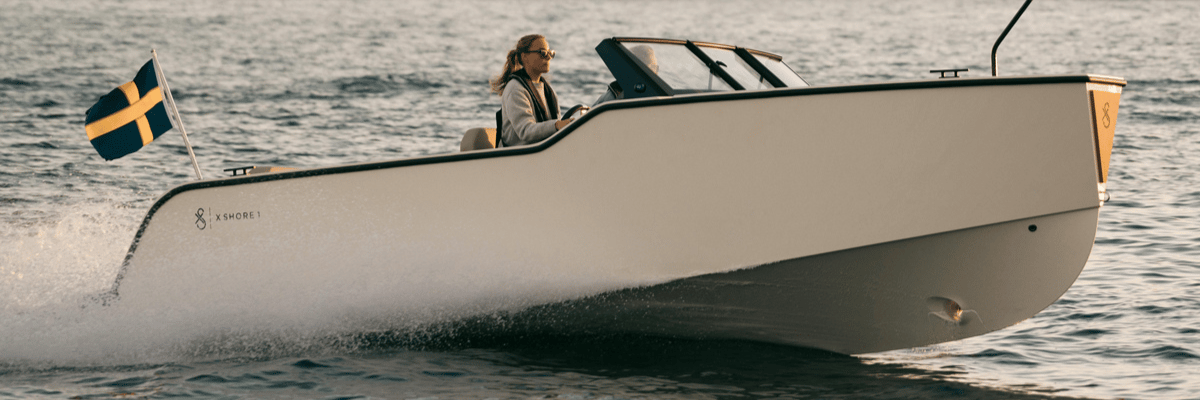
One ground-breaking pioneer in electric propelled leisure craft, X-Shore has gone through phases of liquidation but has come back with renewed ambitions to be an industry leader in electric boating. CEO René Hansen shares his analysis of the current market and developments needed in the near future. “The professional segment is where the shift becomes undeniable. In Europe alone, there are approximately 36,000 boats in the 0–15 meter category that will need to change to electric propulsion.Commercial boats are the first to be effected by regulations.. When operators look at the numbers, the case is clear: significantly lower operational costs, less maintenance, and more uptime with electric propelled workboats. Regulation is accelerating this transition. Norway is already moving toward zero-emission requirements in key segments by 2027 (0-15 meter), which is shifting investment decisions today to avoid stranded assets.”
Outperform
As a boat builder, we are also investing heavily in the digital layer, connectivity, data, and how the vessel interacts with its owner and its environment. That’s where electric boating becomes fundamentally different, not just a replacement for combustion. The goal is simple: deliver boats that outperform traditional alternatives, not just environmentally, but operationally and experientially.”Momentum
Looking back over the past decade, Hansen sees how regulation and infrastructure have been key drivers for adaptation. And they continue to be in ever more regions around the world: “Scandinavia is where it all started, with its culture, infrastructure, and where policy environment are already aligned with electric boating. But this is no longer a regional shift. If you look at the automotive industry, the direction is clear, China, California, the Pacific Northwest, and Scandinavia are leading.The same fundamentals now apply at sea. When technology reaches performance parity and delivers significantly lower operating costs, adoption accelerates. In the U.S., programs like CORE are helping accelerate that transition by making the economics even more compelling for operators. Beyond that, we see strong forward momentum in India and the Middle East. In India, it’s driven by tourism, religious tourism, and increasing government investment in cleaner infrastructure. In the Middle East, it’s a combination of luxury tourism and stricter environmental requirements in key areas where noise and emissions are no longer acceptable.”
Ferry Excellence
Sandith Thandasherry, CEO of Navalt Solar & Electric Boats has been a pioneer to introduce electric propelled ferries in his home country India. Aditya, our first solar ferry, has been running for nine years now. In that time, it has carried more than 3 million passengers, travelled over 200,000 km, saved 300,000 litres of diesel, and avoided around 780 tonnes of CO₂. These numbers tell a very clear story: solar-electric ferries are not an experiment anymore—they’re a proven, mainstream solution for slow-speed inland transport.Aditya is probably the lowest-cost operating ferry in the world. We now operate 40 such boats across India, and something interesting has happened because of Aditya’s success: catamaran designs have become the default for ferries. The stability margin is so high that even when ferries get crowded, safety isn’t compromised. Also, most of the new construction has moved to composites and in some cases aluminium to save energy by being lighter than steel and wood.”
Design for electric
“A lot of people also underestimate the impact of design. If you simply take a diesel hull and put batteries in it, of course the CAPEX goes up. But if you redesign the hull to reduce drag and weight, the battery becomes smaller and cheaper. Add solar and you reduce both CAPEX and OPEX further. And if you build the system for reliability, maintenance costs drop dramatically. It’s the combination of these three things—design efficiency, solar contribution, and reliability—that delivers the economics. And we’ve seen it play out exactly as predicted. For example, Aditya recovered its CAPEX difference in three years, and the battery replacement in year seven occurred exactly as planned. This is relevant for patrol boats, harbour craft, tugs, and cargo vessels—basically the entire segment that operates at heavy energy need (due to speed, function or cargo weight) for longer durations. That’s where we expect major breakthroughs over the next decade.”
Ecosystem
“The priority now is building the ecosystem that allows innovation to scale,” says Jover: “Infrastructure, financing, standards, data, and policy frameworks that keep pace with technological progress. The organizations and regions that successfully align these elements will be best positioned to capture the economic opportunities, efficiency gains, and industrial growth enabled by the next generation of maritime technologies.The quotations from Daniele Gaviotis, René Hansen and Sandith Thandasherry are derived from interviews they had with IEMA, published on LinkedIn.