Emma York on Mentorship and Marine Careers
Digital marketing specialist Emma York had to be encouraged that she would be a great fit as a mentor for The Magenta Project. Now she is similarly reassuring young women as she supports them in the development of their marine industry careers.
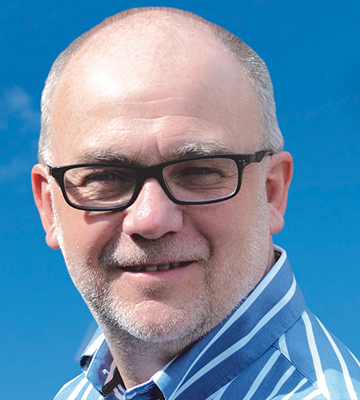 Kim Hollamby
How did you get into the leisure marine industry?
I started sailing when I was about 10 years old. My family are not from a sailing background, but I was lucky that I got taken on holidays with my best friend and her family – my friend’s father taught us both how to sail.
I’ve always loved the water, so when I was ready to start a career, it was natural to look in that direction. I just happened to be with some people at the right time who pointed me towards the training organisations we all know now as Flying Fish and UKSA.
I went away to Australia, never having flown before, did every qualification, said yes to every yacht race, worked for free and cleaned boats. One day I got asked to write a boat race report. What followed was many years of typing reports and sending them in the post to magazines as we did then. In between all of that, I did a lot of kite surfing and sailing, including entering many races. It’s ultimately how I met my husband.
In 2010 I returned to the UK for what I thought would be a few weeks just to see my sister while she was having her first baby. But while back I met Peter Gordon, my very first employer, and he pointed me in the direction of British Marine (the UK’s marine industry association) and its boat show subsidiary. I took a role there for four years before leaving to launch my own business – Fresh Approach.
How has your business evolved since you launched it in 2013?
I've needed to adapt several times as marketing has evolved since the business started. The word ‘pivot’ got overused in COVID but it does describe my experience. I know I can't do the same thing all the time because the people who want my help need different things now – you need to adapt and change. I still retain some elements of what I was doing when I first started my business, but much of it is different and in five years’ time it will be different again.
There have been three obvious phases of development. I started with traditional media – written articles going into magazines, working with journalists, press releases and similar marketing.
The second phase saw me move heavily into digital marketing – predominantly social media, still with some written elements but in appropriate social formats. This phase required me to develop a deep understanding of all social media platforms and how they can help companies in the marine industry.
The third phase, which I’m in right now, is still rooted in digital marketing. However instead of being paid to do the work I’m more focused now on mentoring and teaching others how to get the best out of their social media activities and how to do things for themselves. It’s something I really enjoy.
How did you become a mentor for The Magenta Project?
My husband, Chris, was listening to a marine industry podcast where they were talking about The Magenta Project and its search for volunteers to serve on its mentoring programme. He told me that I should sign up for it.
I had that normal thought: ‘I couldn't possibly, I'm not good enough, I might not have all the skills. They will never accept me’. But I realised I had nothing to lose if I filled in the form. It took me a day to complete it. It’s not until you really drill down into who you are and the experiences that you’ve had that you realise what you have to offer other people.
It was all thanks to Chris that I applied and got accepted – he had seen what I do in terms of teaching and mentoring others in my own business and believed in me. He is my biggest champion.
Shortly before I was accepted The Magenta Project added management and media to its growing list of pathways that support the career growth of women in the marine industry. That was the right area for me to work in and I have already worked with several mentees from all over the world.
In which ways do you assist your mentees?
Mentoring for The Magenta Project is not what I initially supposed it might be – supporting people in learning basic skills. As it happens, the mentees I’ve worked with already have a very good knowledge of the basics. Their needs are more about identifying what they want to achieve and how to get there.
In the first stages of the nine-month mentoring process we identify their end goal and then establish how I can help them get there. Sometimes I just move them on one step and then they do the rest themselves. Or we’re able to work through an entire action plan so that they get the thing that they want at the end. A lot of it is helping introduce them to industry contacts, coach them how to approach people and shape their CVs. It helps also to give mentees perspective about their actual capabilities and how their personal impression may well underplay their actual abilities.
I get equally, if not more, out of mentoring than I think my mentees get. I want to continue my journey as a mentor with The Magenta Project and help many more young people to discover the wide range of career opportunities that are available.
Do you think the emergence of digital media has made a profound difference to the ability of females to have their voices heard?
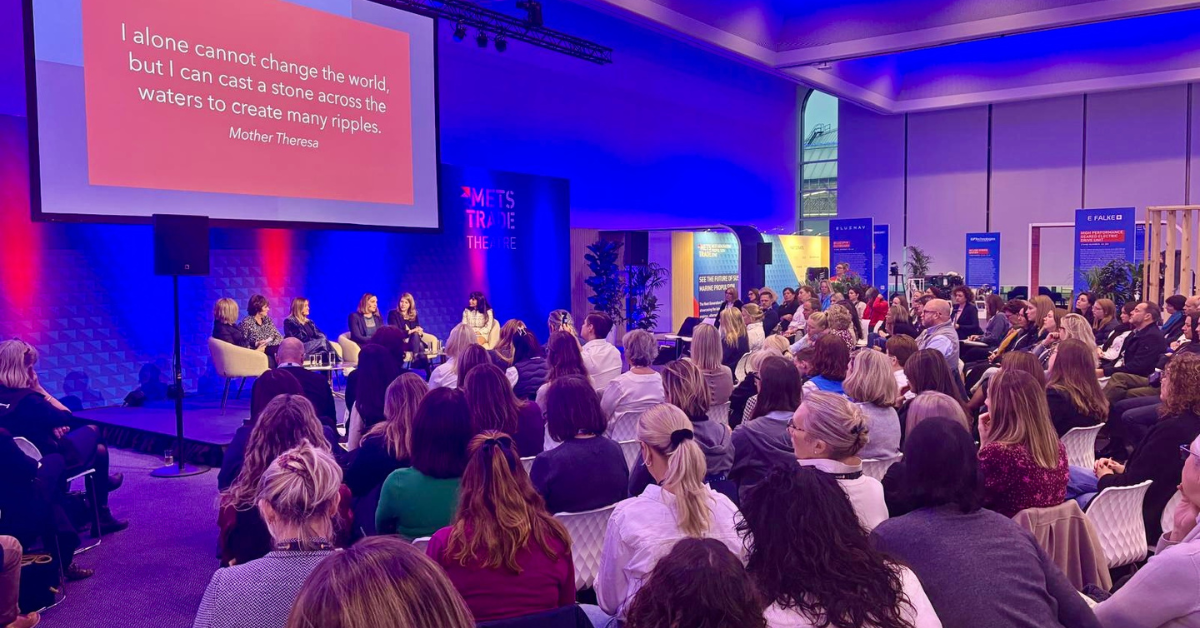
Yes, it has but we've still got more doors to open. The Magenta Project’s 2x25 equity, diversity and inclusion review proves that there is much left to do. Social media provides a voice but however well trained you are it’s not an easy task to use it effectively. I know from personal experience it is harder than most people realise for role models like professional sailors Frankie Klapisch and Cole Brauer to put themselves out there, every single day, showing other girls and women that there are absolutely all the opportunities that they could ever dream of.
The Magenta Project supported the Metstrade Young Professionals Club for the first time in 2025 – what were your impressions?
I’ve been going to Metstrade for a very long time. It is one of my favourite events, held at the perfect time of year for me when I am planning things. I get to see a lot of people that I know, as well as first-time contacts.
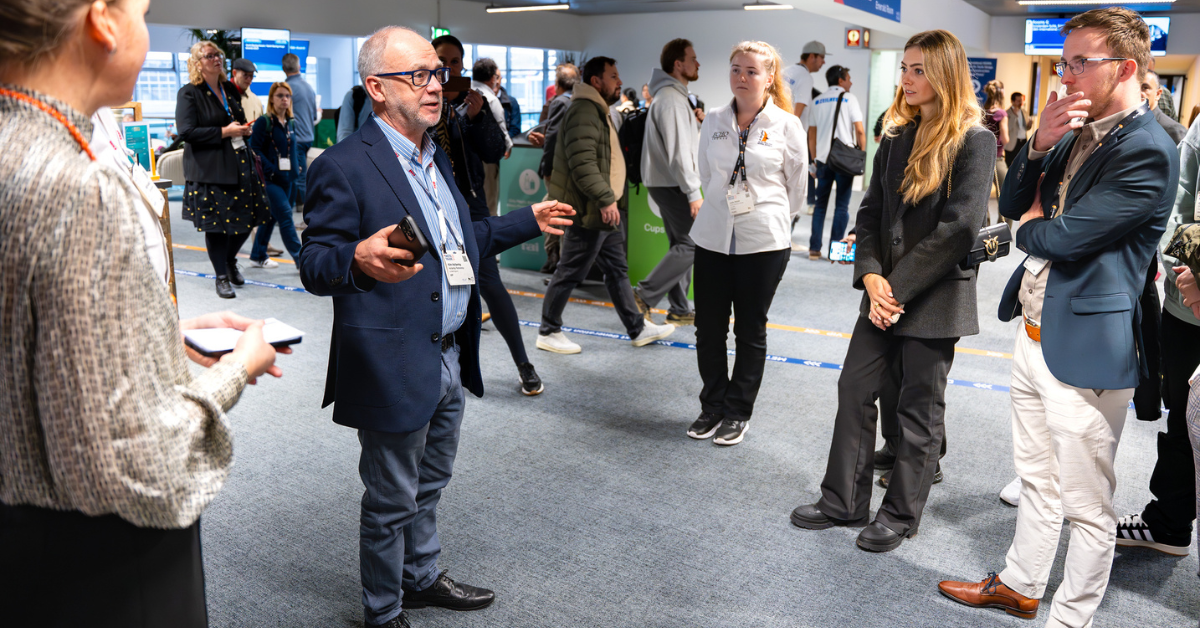
All boat shows can be overwhelming if you don’t know your way around and Metstrade is enormous – I typically walk 20,000-30,000 steps each day there to get around the people I want to meet. So, to have the Young Professionals Club lounge available, even just to be able to go in and know that there would be people there that I could be with and not be alone – that was really good. It is an excellent feature of the show, centrally located and easy to find. To have The Magenta Project there was one of the best collaborations we could have wished for.
There are some very impressive people in the lounge as well. You often don't realise in the moment, but it's when you get home and someone sends a picture that you realise you were stood in a group of people where you've got the MD of a well-known business, someone from SailGP and a young graduate who has just been taken on by the Ocean Race. Then you realise you're not just in the room, but in a very tight knit group having a wonderful conversation about where everyone's come from and what they are doing today. I arrived home with something like 15 new valuable LinkedIn connections which enables you to continue your conversations.
What are your thoughts and ambitions for the future of leisure marine?
I have been screaming into a megaphone for decades about the marine industry and the careers that are available across many skills. So, I'd like more people to realise those opportunities.
I’d personally like to continue developing my role within The Magenta Project. I am extremely passionate about keelboats and getting more people into sailing and developing that within the UK. The Magenta Project has some great pathways, with more to come. These can doors into the industry for even more young women and people into the industry.
In terms of sailing, I’ve just got back from the bicentenary Cowes Week event in the UK and from helping to run the British Nationals, Edinburgh Cup and Marblehead Trophy for the International Dragon Class, which I sail in. I’ve seen first-hand a positive upturn with more boats on start lines and more people entering events. That means more crewing and sailing opportunities.
We used to see a large gap in people’s engagement with sailing, with them leaving around the time of young adulthood and not returning until later in life. We’re witnessing so many people coming back now which encourages me more, especially as I also work in events. This should also mean the return or more sponsorships, partnerships and industry involvement. Sailing is ultimately one big supply chain that can create opportunities for people at every single level.
In terms of my profession, while there's still a need for our editors, magazines and their print runs, the desire of many now to consume their news and media in a very quickly consumed formats makes social media vital to the continued growth and success of our industry. Not just to cover the America’s Cup and the Olympics but also to reveal the other levels where 99% of people sail. That's why I say to my mentees all the time – whatever level you're at, it is important, there is value in it, and we must keep talking about it.
The Magenta Project
The Magenta Project is an award-winning global charity, dedicated to building a sustainable network and implementing impactful programmes. Its mission is to ensure greater equity and inclusion for women in the sport and the wider marine industry, by working to dismantle the barriers that hinder their full participation and advancement.
The Metstrade Young Professionals Club
The Young Professionals Club (YPC) unites young industry experts (under 40) from diverse backgrounds, fostering networking opportunities both online and offline. At the Metstrade show floor, our exclusive members-only lounge provides a face-to-face setting for encountering peers and gaining insights from industry leaders. The members can also benefit from the YPC LinkedIn Group, not only during the show but also year-around.
At this year’s Metstrade The Young Professionals Club will be located centrally near Entrance C, adjacent to Hall 13
See metstrade.com/stages-and-specials/young-professionals-club