Large scale to improve boat recycling efficiency
End-of-life boat collection to become a continent-wide effort
Abandoned boats that remain along the shores of lakes, rivers and coasts are being removed for recycling in France and the United States in large numbers. In other European countries, removal of end-of-life boats has started and is scaling up. Funding these operations is a collective effort of industry associations and government. First operations prove positive. Continent-wide recycling is being prepared.
 Hans Buitelaar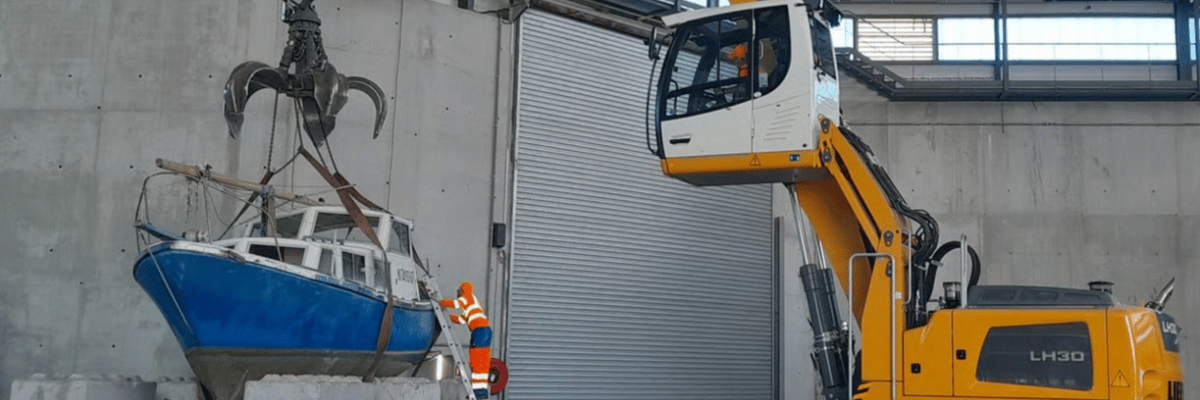
The National Oceanic and Atmospheric Administration (NOAA) Marine Debris Program in the United States provided a 10 million dollar grant in 2023, for a massive clean-up effort to remove abandoned and derelict vessels from US coastal waterways and the Great Lakes. BoatUS, the association of boat owners, received the funds to start the clean-up program.
Locate & collect
The first action was to create a database of abandoned boats and their locations. Before taking these boats away and scrapping them, one needs to know where they are. Since 2023, the first end-of-life boats have been collected and scrapped. Last year, the BoatUS clean-up fund paid for the collection and retrieval of over three hundred boats in five states, US territories and one tribal reservation. During the now started 2026 boating season, all boaters are asked to use the database and report abandoned boats they observe along the waters they navigate. BoatUS is ready to start removing boats nationwide this season. “With boating season around the corner, boaters have an opportunity to spot and report abandoned vessels that might otherwise go unnoticed,” says BoatUS Foundation director of outreach, Alanna Keating. “Each report helps communities better address the issue of abandoned and derelict vessels by supporting both removal efforts and prevention.” Reporting takes a few minutes. The information provided by boaters supports clean-up efforts. Cost involved with collecting a boat, dismantling and recycling may exceed 24,000 dollar per vessel.
Thousands of boats, dozens of facilities
In France, a boat tax called ‘Teamup’ was introduced in 2022 to create funds for ocean life protection, maintenance of boating infrastructure and end-of-life recycling. This has initiated the founding of APER: Association pour la Plaisance Eco-Responsable. By the end of 2024, an impressive 11,000 boats had been dismantled. 36 facilities for boat recycling were established or provisions for recycling are installed on existing yards. APER claims to have three quarters of all reclaimed materials either recycled or burnt to generate electricity. Collecting and recycling is free for the last owners of the boat. These are the boaters who can only afford an old used boat at the end of it’s lifetime, while previous owners have had benefit of the vessel before. That is why the boating industry and the government argue that a tax during ownership is the fairest way to fund the recycling. APER started as project for four years in 2015, but it is continued until at least 2029. The boat tax is raised on boats from 7 meters long, progressive over the length of a boat, and also weighed for the power of the engine, exceeding with the installed horsepower on board. A 10 meter yacht with a 35 horsepower engine, for example, would pay 254 euros per year. Estimated revenues from this Teamup tax are 45 million euros annually. The French tax collector is planning adaptations for the tax starting 2027, but the industry is heavily criticising the changes.
High cost, low revenues
Dismantling boats and recycling the materials that remain, is a cost factor. The value of equipment and raw materials that can be reclaimed, is lower than the cost of collecting and treating the boats. Positive examples of the collection, dismantling and recycling of end-of-life boats do exist, but it is the cost factor that has prevented widespread adaptation of boat recycling. In France, boat registration is mandatory. In many other countries, including EU countries, it is not. There is no formal knowledge of the number of boats and their ownership. It is very hard to confirm ownership of an abandoned boat. With no registered ownership, no taxes can be raised. And the cost of recycling still isn’t covered by the revenues of sales of parts and reclaimed materials. In order to proceed towards circularity, plans are presented to accelerate recreational boat recycling.
Circular by 2030
In Europe, the most prominent plan is the ‘Roadmap for the implementation of the circular economy for end-of-life boats’ presented in March 2023 by the industry association EBI – European Boating Industry. This roadmap should show the way towards a fully circular boating industry by 2030. The groundbreaking idea is to set up a pan-European composite recycling industry. Not only boats, built with glass fibre and polyester resin, but also the blades from the wind energy turbines. The first generation of wind turbines on land and sea have been in service for over 30 years across Europe. They are replaced with new turbines and the old wings pose the same problem as end-of-life boats. They leave the same kind of material. Large scale will reduce the cost per item, is the idea presented in the report.
Strategic supply
Action is taken. A Luxemburg & Bristol (UK) based start-up, Uplift360, has been awarded a 7.4 million grant to set up a European composite collection system. Not only environmental considerations are weighed in setting up a reclaiming system for used composites. There is a lot of end-of-life composite and re-using it can lead to better material independence in Europe. The fossil sourced materials are mostly not sourced in Europe itself and international suppply chains do not provide the certainty they used to. These advanced materials might prove critical in the future. A recycling system would provide home resources.
Volumes to recycle
A lot of composite boats have been built in Europe and the US since mid 1950’s. The early examples of boats being constructed in this then novel material are up to 70 years old. An estimate presented in the EBI roadmap calculates the number of boats reaching the end of their use to be around 30 to 40,000 in the EU by 2030. This would represent at least 30.000 tons of bare composite material. The technology to separate resin from fibres is available and the use of this technology is rapidly increasing. (see earlier reporting on this issue: https://www.metstrade.com/news/sustainability/upcycling-disposed-composites ). End-of-life wind blades represented also about 30.000 tons of composite material in 2025. This is estimated to increase up to 60.000 tons by 2030. Wind turbines have been installed a lot later throughout Europe then the first composite boats. As this industry rapidly developed during the 1990’s, the number of end-of-life blades will grow over time. Combining the collection and recycling of boats and windmill blades, could provide the larger scale needed for cost-effective recycling.
Dismantling scraps
Of course, GRP in boats is only part of the materials. There are steel wires, metal winches and stanchions, engines with oil and fuel in them, wood, fabric and foam in the interiors and electronics and paint. Before a boat can go to the Uplift360 recycling plant, a lot of dismantling needs to be done. Some of the equipment retrieved might have a resale value, but most of it is obsolete. Few boaters would install 1980’s electronics for navigation. For this part of reclaiming materials, becoming a truly circular industry might prove a hard task for boat builders.
To report abandoned boats in the US, go to the BoatUS ADV database: https://www.boatus.org/adv-database